
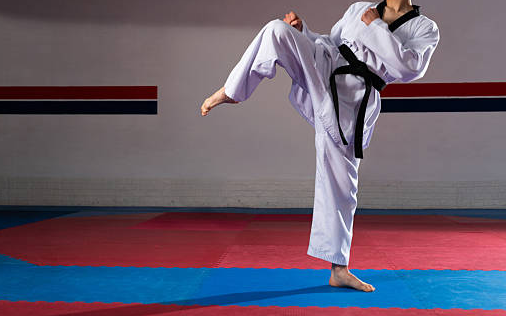
In the past, martial arts training halls were often rugged, basic spaces perhaps a wooden floor for Karate or a canvas sheet over sawdust for wrestling. Those days are long gone. The modern combat sports industry demands professionalism, and students expect a facility that is clean, safe, and world-class. Whether you are running a traditional academy or a modern MMA gym, the flooring is the most visible and critical element of your facility. Meeting the essential standards for martial art mats is not just about aesthetics; it is a matter of liability, hygiene, and performance.
The first standard to consider is the “Critical Fall Height” (CFH). This is a safety measure that determines how well a floor can absorb impact from a fall to prevent head injuries. In a striking-based dojo (like Muay Thai or Boxing), the fall risk is lower, so a high-density, thinner mat (typically 20-25mm) is standard. This firmness allows for fast pivots and stable footing. However, for grappling arts or styles that involve throws (like Hapkido or Aikido), the CFH requirement increases. Here, you must use thicker martial art mats, usually 40mm or 50mm, to ensure that a student falling from standing height is adequately protected. Ignoring these physical standards is a significant liability risk for any gym owner.
Hygiene is the next non-negotiable standard. In a contact sport environment, sweat, blood, and skin cells are inevitable. Old-style canvas mats or porous foams are breeding grounds for bacteria and fungi, leading to infections like ringworm or staph. Modern martial art mats must feature a fully sealed, non-porous surface. This allows for rigorous daily cleaning with hospital-grade disinfectants without damaging the material. The surface should be water-resistant, ensuring that fluids sit on top rather than soaking into the core. A gym that smells fresh and looks clean retains members; one that smells of old sweat does not.
Surface texture is another area where standards have evolved. The finish of the mat must match the activity. For traditional arts, a “tatami” pattern (a rice-straw weave texture) is the standard. It provides high grip for bare feet, crucial for generating power in stances. However, for No-Gi grappling or MMA, a tatami finish can cause friction burns (mat burn) on knees and elbows. Therefore, the modern standard for these zones is a smooth or leather-effect finish. Many modern facilities now use a mix of martial art mats, designating specific zones with different textures for different classes smooth for wrestling, tatami for striking.
Durability and installation standards are also vital for the business bottom line. A busy dojo sees hundreds of hours of foot traffic every week. Cheap, low-density mats will compress and lose their bounce within months, leading to a “dead floor” that feels hard and unsafe. Professional-grade martial art mats use high-density EVA or bonded foam cores that retain their shape for years. Furthermore, the installation must be secure. Mats should be tightly fitted wall-to-wall or framed with proper edging to prevent gaps. A gap of even a few millimetres is a place where a toe can get caught and broken.
Finally, fire safety standards cannot be ignored. In the UK and Europe, reputable mats should meet specific fire retardancy regulations (such as the EN 12503 standard). This is often a requirement for your building insurance and local council permits.
Ultimately, your floor is the foundation of your business. It is where your students learn, fail, and succeed. By adhering to strict standards for density, hygiene, and safety when selecting your martial art mats, you demonstrate a commitment to your students’ well-being. A professional floor elevates the entire perception of your gym, turning a simple training room into a respected academy of martial arts excellence.