
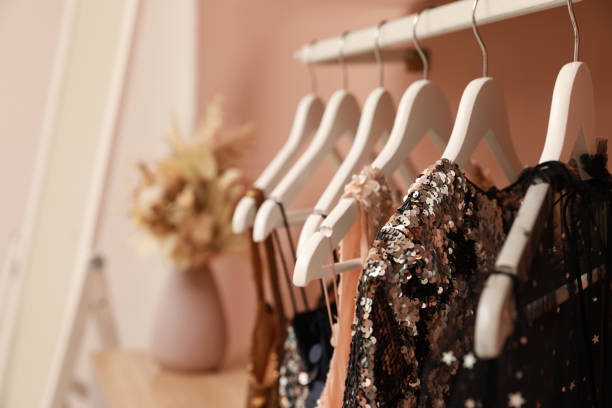
For a garden party, movement comes first. Guests may walk across grass, stand for long periods and shift between sun and shade. Midi lengths usually balance polish with practicality, while flowing skirts allow an easy stride. Light tailoring, floral motifs and fresh colour can suit the mood, but the dress should not rely on a fragile hem that drags outdoors. Breathable fabric and a later layer make the outfit adaptable.
Footwear and dress need to be planned together. A narrow stiletto can make even the right dress feel unsuitable on soft ground. Block heels, wedges, dressy flats or low slingbacks offer greater stability. The hem should then be checked with the chosen shoe, not an imaginary higher heel. When shopping for designer dresses, this full-outfit test prevents a graceful silhouette in the fitting room from becoming awkward at the venue.
A gala raises the level of finish. Floor-length gowns remain appropriate for many black-tie events, while some modern galas allow a formal midi or sharply cut column dress. Fabric, construction and proportion carry more weight than decoration alone. Satin, crepe, velvet and structured woven materials can create presence through surface and drape. Sequins may work beautifully, but they are not compulsory; a restrained dress can feel equally formal when its line is strong.
“Black tie” generally points towards formal evening wear. “Cocktail” allows shorter lengths and more flexibility. A themed gala may invite colour or historical references, yet costume should not be assumed unless the wording makes that clear. A ballroom, gallery and outdoor marquee each create a different atmosphere. When uncertainty remains, it is safer to dress with polish and keep accessories controlled than to rely on novelty.
Long lunches involve a subtler transition. The outfit needs enough presence for an occasion but should still look natural in daylight. Soft tailoring, printed silk, linen blends and refined knit dresses can all work, depending on the season and restaurant. A midi or elegant ankle length often moves comfortably from table to terrace. Very heavy embellishment can feel misplaced at noon, while an overly casual sundress may not carry the later hours.
Layering helps manage that shift. A cropped jacket can sharpen a fluid dress. A lightweight wrap provides warmth without hiding the neckline. Jewellery can begin quietly and gain impact through one strong element, such as earrings or a cuff. Among designer dresses, the most useful long-lunch option is often the one that changes mood with accessories rather than requiring a complete restyle.
Across all three occasions, fit should support sitting, eating and walking. Check the dress from the back, raise the arms, sit for several minutes and notice whether the waist or neckline moves. A garment that looks perfect only while standing still will become distracting. Underwear also affects the final line, so it should be tested before the event rather than treated as an afterthought.
Colour can respond to time and place without following rigid rules. Soft tones and botanical shades suit many daytime settings, though deep colour can work when the fabric feels light. Evening galas welcome richer shades, metallic accents and black. Prints tend to feel more relaxed, but scale and contrast can make them formal.
The clearest dress code strategy is to match the garment’s energy to the occasion. Garden parties reward lightness and practical movement. Galas call for deliberate formality. Long lunches need polish that remains comfortable through changing light and pace. Carefully chosen designer dresses can cover these demands, but the strongest choice always considers the venue, the body in motion and the hours the event is likely to last.